The Palmdoc Chronicles

Wednesday, March 23, 2005

Wireless Merck

Preess Announcement:

Charlottesville, VA, March 22, 2005— Unbound Medicine, a leader in knowledge management solutions for healthcare, today introduced a wireless medical resource for physicians and other healthcare professionals. In partnership with Merck & Co., Inc., Unbound Medicine now gives clinicians 24-hour access to select medical information from the MerckMedicus internet site using their wireless Personal Digital Assistant (PDA), Blackberry, or smartphone.

“We are pleased to extend our partnership with Merck to deliver trusted medical information to the point of need,” said William Detmer, MD, president and CEO of Unbound Medicine. “As physicians are constantly on the go during the average day, the new wireless MerckMedicus will help them find answers when questions arise and stay abreast of the latest advances in medicine.”

Using Unbound Medicine’s powerful mobile platform, current medical resources can be accessed using a wireless internet connection to www.merckmedicus.com, including: The Merck Manual of Diagnosis and Therapy, MEDLINE Journal abstracts, Pocket Guide to Diagnostic Tests, and Reuters Medical News. The Personal Search Assistant allows clinicians to query more than 11 million medical articles in the MEDLINE database from their handheld or wireless device in real-time without access fees or advertising content.

The wireless option is compatible with cellular phones with web-browsing capabilities, smartphones, and other wireless devices that use Pocket PC, Blackberry, or Palm OS operating systems. It follows the launch of Mobile MerckMedicus, which was designed for non-wireless PDAs and introduced by Unbound Medicine and Merck in 2004. For more information on wireless MerckMedicus, or to register, visit www.merckmedicus.com.


Here's hoping yet again for palmOne's dual wireless PDA. Many things are going wireless and unless palmOne comes out with a new model with builtin Wifi, they are going to be left far behind. I just got myself a Dell Axim x50v see what a PPC is really like. no I haven't been sucked into the "dark side" ;) as my daily PDA is still the T5. However I must say builtin wireless is very handy. The T5 with 400Mhz though is still much faster than the X50v at 624 Mhz and can run rings round it :P

Tuesday, March 22, 2005

Gmail invitations up for grabs!

I've still got plenty of free Gmail invitations so if you can email me & share your Palm/PPC/PDA Medical thoughts, I'll be happy to send you an invite!

Monday, March 21, 2005

OnTimeRx Italian

OnTimeRx 2.4 - è disponibile per gli utenti di lingua italiana

Well its nice to see mutli-language options for great apps like OnTimeRx which is a very useful medication reminder. This is a terrific way for developers to refresh their applications IMO.
Hopefully the author of OnTimeRx can come up with Asian language versions e.g. in Chinese and Japanese. A Malay/Indonesian version would be easy to come out with since this language uses the Roman alphabet.

For more info visit the OnTimeRx Homepage

Saturday, March 19, 2005

New Skyscape releases

Natural Medicines Comprehensive Database 2005 - Natural Medicines Comprehensive Database 2005 gives you everything you want to know about herbs, vitamins, minerals, supplements.

Physicians' Cancer Chemotherapy Drug Manual 2005 - Completely revised and updated for 2005, this practical handbook is an up-to-date guide to all aspects of cancer chemotherapy.

Thursday, March 17, 2005

Clinical Hematology-Oncology 2006 v1

CG Weber/ Pacific Primary Care has just released Clinical Hematology-Oncology 2006 v1 in Palmgear.

Description
An extensive reference text on the presentation, diagnosis, treatment and differential of Hem-Onc conditions.
Topics include: cancers, Oncologic Emergencies, DVT, pulmonary embolism, the anemia's, lead toxicity, sickle cell, prophyria, cancer syndromes & tx, blood cell abnormalities, transfusion medicine, bleeding disorders, DIC...
Features: illustrations and hyperlinks. Detailed workups and extensive treatment options. Edited by a board certified Hematologist-Oncologist.


Just purchased it myself from Palmgear - it's a bargain at US$11.95. Almost 1 Mb in size so it's really packed with information. Sometimes you just want to read up on a topic much like a book rather than an Outline like Skyscape's applications and here is where iSilo shines - you can create your own Fonts with iSiloX and and the hyperlinking within the text document is superb.
I haven't really read thru the book - but just jumping to the section on Myelodysplastic syndrome, I was impressed to see fairly up-to-date information on the new WHO classification and drug treatment like Azacitidine and Lenalidomide mentioned.

Using PDAs to study alcohol and aggression

Spotted in Palmaddicts:

Peter Hoaken at The University of Western Ontario wants to further explore the ties between alcohol and human aggression by collecting information using PDAs.
Source: Canada Newswire

They didn't quit say whether the PDAs were PalmOS or PPC but I'll bet they are PalmOS. Surely in an inebriated state it would be too difficult to tap tap tap tap tap on a PPC compared with click-tap on a Palm ;)

Wednesday, March 16, 2005

Hopkin's Opioid Conversion software

Read about the Hopkin's Opioid Conversion Software from Ectopic Brain's site.
Registration is free - you will be given a serial number to input.
What I can add is it works fine on my T5.

MDRD 1.0

Timothy Allen has released MDRD 1.0 on Palmgear

Description:
A must for medical students rotating on nephrology or anyone wishing to have the most accurate estimate of GFR. MDRD calculates GFR from the serum creatinine using the revised quadratic MDRD equation from Rule,AD, Annals of Internal Medicine 2004;141:929-936. This equation has been found to be substantially more accurate than the original MDRD equation and the Cockoff and Gault equation.


Freeware.

Tuesday, March 15, 2005

ClinRx

ClinRx has been updated and is now version 5.1f
This app does "Creatinine Clearance, Renal Dosing, and Vanco/Amglycoside Kinetics for adults and peds". The new version incorporates a Renal dosing table update.

Alterblog

I decided to retire my Blurty and move on to Livejournal. Blurty at times is quite slow and I find Livejournal has more features.
Palmdoc Live will feature my thoughts and ramblings on non-medical PDA matters but still concentrate on Palm and computer related stuff.....

Sunday, March 13, 2005

Another Palmdoc

Hey, there's a clone running loose :P
Palmdocs is a good resource for doctors with PDAs.
There are tutorials as well as some great free iSilo medical references. I like the Flash tutorial which shows you how to make your own iSilo medical reference using Word + iSiloX.

Saturday, March 12, 2005

Get Wiser

The NLM has released a free PDA tool to help first responders when they arrive at a hazardous material (Hazmat) incident, such as a chemical spill.
MedicalNewsToday reports:
WISER (Wireless Information System for Emergency Responders) provides the emergency responder with critical information on hazardous substances, including physical characteristics, human health data, and containment and suppression information. Employing the unique characteristics of a PDA (Personal Digital Assistant), WISER is customized for easy navigation and quick access to key information required by first responders. To aid decision making, users can specify the role they are currently performing at the scene of an incident, and WISER organizes the critical information in a sequence most relevant to a first responder on-the-scene, a Hazmat specialist, or an emergency medical specialist (EMS)


Wiser for PalmOS and PPC are now available for free download

Thursday, March 10, 2005

Schwartz Principles of Surgery

USBMIS is now inviting beta testers for their up coming Schwartz Principles of Surgery, PDA Edition. Palmd and PPC versions are available

Description:
With its extensive content and custom-designed user interface, Schwartz Principles of Surgery, PDA Edition enables you quick access to the answers you need to make the right diagnosis or initiate a treatment. Interlinked content, a notes feature, and custom bookmarks make this more than a reference application. Schwartz Principles of Surgery has developed into the ultimate PDA tool for anyone enrolled in a surgical clerkship or surgical residency.
Schwartz's textbook of surgery is one of the world's most well known references in general surgery. This reference is considered a must for anyone studying or training in the field of surgery.
This edition has extensive information about:
* Trauma
* Transplantation
* Oncology
* Congenital and acquired heart diseases
* Wound healing physiology and care

PEPID RN Student Clinical Companion

Pepid have released PEPID RN Student Clinical Companion on Palmgear. It's a whopping US$119.95 but you get Pepid RN, drug database and the clinical companion which is billed as "fully integrated into PEPID RN and is the only comprehensive, point-of-care clinical reference tool designed specifically for student nurses", and is available for both PDA and Internet access.

Wednesday, March 09, 2005

Geriatrics At Your Fingertips

The GAYF has been updated and the 2005 book edition has been released.
New Features of Geriatrics At Your Fingertips® 2005, include:
Fully updates text, with information on new medications released as recently as November 2004
* Newly revised user-friendly algorithms
* New section on tinnitus, bi-polar disorder, skin and soft-tissue infections, chronic kidney failure, hyperkalemia, and fecal incontinence
* New assessment instruments include Palliative Performance Scale (PPS), Karnofsky Scale, and Reisberg Functional Assessment Staging (FAST) Scale
The PDA version will be available free sometime in Spring.

Sunday, March 06, 2005

Uptodate for non-PPCs

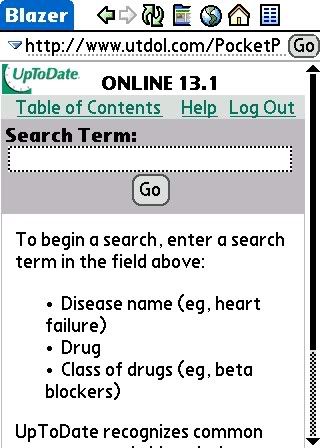
Those of us without a PPC and type II CF Card storage need not fret. We can access UpToDate wirelessly. Just surf over to UpToDate's PDA portal and login. I think it is more practical than stuffing it all into a memory card. It also drives home the fact that palmOne MUST take Wifi seriously and come up with more models with builtin Wifi.

Screenshot using my T5 + SD Wifi card:

Image hosted by Photobucket.com

Haemoncrules 1.8

I have updated Haemoncrules and it is now version 1.8 with a total of 30 modules

The changes:
- Added a Malignant/Benign Menu filter
- Added Lansky to Performance scores
- Updated PRV Diagnosis
- Added ET Diagnosis

Visit the HaemOncRules Homepage for more details and the download link.

Oh, it's still freeware ;) And as I still don't have a PPC, there still isn't a PPC version, sorry ;)

Getting Medscape articles on your PDA

Medscape is a great and free online resource for medical doctors.
Sometime back, a colleague of mind who uses a palmOne Tungsten|E asked me how to get copies of Medscape articles into his PDA for offline reading.
Well, some of you might be wondering the same thing so I will run through a few solutions for offline reading.

The most important thing is to select the Print option from Medscape: normally an icon which looks like Print Icon somewhere at the top of the article.

1) Repligo. This is a great product from Cerience. The reader is free but the converter is not free but is very easy to use. Once you install the converter, Repligo will be installed as a "printer driver" so all you do is select the usual File/Print and then Repligo as the printer. You could do this for any thing else including PDF documents by the way.

2)iSilo. This is a popular shareware ebook reader and like repligo has text and image capability as well as great hypertext linking. For Medscape, after selecting the Print option, you need to Save the page as a HTML document. Just choose File/Save Page As from your Browser and select a page to save the HTML document somewhere on your hard drive. Using the free iSiloX converter, you then convert this HTML document into an iSilo compatible pdb file which you can sync to your Palm or install in Palm/Programs/iSilo on your Card.


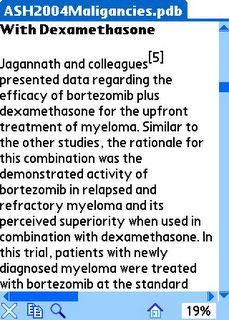
Snapshot of iSilo view of a Medscape article Posted by Hello

3)Plucker/Sunrise combo. This third option is completely free. The reader is called Plucker.This is a free offline HTML reader and a great alternative to iSilo. Download the latest (version 1.8).
You need to save the Medscape page as a HTML file as in iSilo above (after selecting the Print page display)
There are several alternatives to convert HTML files but the one I use is Sunrise. It requires Java but is a nice way to convert local or online web pages (and RSS feeds) to Plucker format. You can download Sunrise from Palmgear (latest version is 0.41f) and read more from the Author's webpage

There are other solutions of course, but the above three are relatively easy ways to get Medscape articles with all the text and pictures onto your handheld. So CS Wong, if you are reading this, HTH!

Saturday, March 05, 2005

New Palm for Gruntdoc

I guess it will happen to all of us at some stage. Your PDA will die on you. Nothing is forever and worse still, due to what I suspect is built-in self-destruct obsolescence, it will die on you sooner than the PDAs made 5 years ago.
Gruntdoc got a T5 to replace his TT. I guess this is good for palmOne since like him (and me for that matter), many are reticent about migrating to the WM2003 platform mainly because we are familiar with PalmOS and also we have invested time, money and software in PalmOS.
The T5 is a decent PDA but it falls short in the aesthetics department. I do wish palmOne will come out with a sexier looking device, and for goodness' sake, please come out with a dual wireless one. You really can't claim to be a "connected organizer" if you remain disconnected from the Wifi world. Although you have the SD Wifi card, it is a pain having to slot it in and out. So c'mon palmOne, wheres the Palm for power users?

Friday, March 04, 2005

Feedback: Switch Story I

Brian S writes in:

I also had a cursed Palm T3, which had a defective digitizer. Palm refused to honor the aftermarket Palm extended warranty, but they finally relented after the seventh call to Palm tech support in India. I have become VERY disenchanted with Palm’s customer support, or lack thereof. This was the sixth Palm pda that I have owned. I switched back to Windows Mobile 2003, when I bought a HP Ipaq 4155. This is the seventh Pocket PC that I have owned. I mainly use Skyscape and Tarascon medical reference software. I also occasionally use Medical Wizard’s Netter flash cards for reference and patient teaching. Activesync can be a REAL pain in the butt sometimes. Do frequent backups.


Thanks for your feedback Brian. A free Gmail invite goes out to you. Plenty more invitations so do write and share your experience if you have switched from Palm to PPC and vice versa.
As for me, after pestering palmOne with emails detailing my disappointing experience with my T3, the Customer Service Manager agreed to treat my case as "in warranty" and I got an SRO for a replacement. So my dead T3 is now off to palmOne. Well this has been beyond my expectations and it has been nice of palmOne to consider individual pleas like mine. However they could pay heed to better quality control - the T3 is a great design and the T5 by comparison is dull. It just needed better QC and less annoying breakdowns like digitiser issues and screen buzz issues.
I think part of the blame for the declining PDA market is the fact that there aren't many "imaginative" and "enticing" models out there to choose from. Hey, not everyone wants a smartphone with tiny screens and limited Ram/Expandibility. Where are the PDAs for power users? I sure hope palmOne will come up something interesting this year.
So the upside is I still haven't succumbed to the dark side yet ;)

Thursday, March 03, 2005

PDE

Well, this week's issue of the NEJM has an article which tells us that what we hold in our hands is not a PDA but a PDE (Personal Digital Educator).

"What's his infection sensitive to?" In 1995, getting the answer to this question required a house officer to find an unoccupied computer at the nursing station, sign on, and traverse the necessary screens to get the culture result. Armed with the answer -- say, "levofloxacin" -- she would ask the follow-up question: "What's the renal dosing?" The next step would typically entail a search for a tattered copy of a drug reference manual.
In 2000, the house officer still needed to turn to the computer for the first answer, but for the second, she might have skipped the scavenger hunt and pulled out her personal digital assistant (PDA). A few quick taps and scribbles, and she had her answer.


The author, Dr. Cimino talks about the various sources of data - standalaone, synchronisation (ala Avantgo) mode and what I think will become more important in time to come, the wireless mode. There is only so much you can store on the PDA, even if you have that 4GB CF Card, it's always never enough. Eventually we'll be using handheld devices to look up information wirelessly.

I found this bit interesting:
The synchronization mode is also being exploited by educators to monitor the clinical experiences of trainees. For example, third-year medical students at Columbia use a case log on their PDAs to collect information about the patients they see. These cases are transferred to a central database, where clerkship directors can review students' encounters to ensure that there is an appropriate mix of cases. The Columbia School of Nursing integrates a patient-tracking log with a variety of decision aids to monitor the extent to which students are providing evidence-based care.


I wish more medical schools could be as innovative as this!

Dr Cimino ends the article with this:

In 2005, when the same question arises -- "What's his infection sensitive to?" -- the PDA comes into play immediately (see the figure). A few taps, and the PDA obtains the answer from the clinical-information system: "levofloxacin." Then "What's the renal dosing?" One additional tap on the PDA screen provides the answer.


How I wish! In fact what is now known as the new Intern's Palmomental Reflex, (something again first published in the NEJM) should be a reflex all doctors learn to use!!

Wednesday, March 02, 2005

Morbidly obese

It's nice to rely your own software when the need arises. The need surely arose when we had to transplant a "morbidly obese" individual with AML. Height 173 cm, Weight over 120 Kg.
The dose of Busulphan (4mg/kg/day) is dependent on Ideal Body Weight (+0.25) so I whipped out Fatcalc (instead of Haemoncrules for a change). The dose difference was huge - more than 100mg a day had we relied on the actual body weight.
Well, I tell my patients that slimming comes as a free package together with the stem cell transplantation so hopefully this guy will slim down after the transplant! ';)

Tuesday, March 01, 2005

Dx/Rx: Heart Failure

Skyscape has revamped their website and the design looks nicer. They also have newly released Dx/Rx: Heart Failure:

Tightly organized into a super-condensed outline bulleted format, this handy manual details precise, up-to-date information for diagnosis and treatment of Heart Failure. Throughout the reference, tables and figures summarize important clinical data and current professional society recommendations, while salient references direct readers to additional information. Current, quick, and concise, for instant access on the ward or in the clinic!

Monday, February 28, 2005

Asco PDA Portal

Joined Docsboard (finally hehe) which looks like a great site if you are a Doc with a keen interest in computers and PDAs.
Picked up a useful pointer : Asco has a PDA Portal. Works like Avantgo and is free - so go check it out.

I'm still strongly in the PalmOS camp in case anyone is worried I have defected :P. I am using a palmOne T5 for my daily PDA use. I still am interested in getting a Dell Axim X50v as a second/spare PDA and also to see what the "Darkside" is all about - hopefully I won't get assimilated!
Latest latest news about my dead T3 is that palmOne support has now "escalated" my issue with them to the Customer Service Manager. So hopefully I'll see a better deal than a replacement costing US$125 with a "generous" 3 month warranty....

Sunday, February 27, 2005

CME Watch

CME Watch is now 1.0

Description:
Keep Track of your CME Hours on your Palm! This program automatically Adds and summarizes Total CME Hours!!
NEW in Version 1.0:
-Export to Memo Pad
-Various Bug Fixes
-Print to PalmPrint
-Archive older CME Records
-NOW FREEWARE!!

Turning to the Dark Side....part II

Well, the dead T3 saga is practically over. palmOne's stand is that since the unit is out of warranty, they will issue a replacement for US$125 and provide a "generous" 3 months warranty on this unit. They can keep it for all I care. It should be at least 6 months warranty given that price and the reliability of a refurbished unit is always in question. I have not had a happy experience with my T3 as I had to replace it twice already.

In preparation for the Dark side, I have switched back to syncing with Outlook instead of Palm Desktop with my T5 (yes, the sole remaining Palm I have, which I have paid good money to palmOne to field test for them).
Eventually when I get my hands on a Dell Axim X50V I can easily migrate my PIM data over. I have identified WM2003 replacements for practically every PDA application I use today so I think the switch can be made. I won't miss Agendus too much as I could rely on Agendus for Windows on the Desktop for clinic use, to manage Patient Appointments. I find Agendus for Windows a far better PIM manager than Outlook and it works on top of Outlook or Palm Desktop and can read PIM data from either source.

Have any of you medical Palm PDA users made the switch from Palm to PPC/WM2003? Care to share your experience/advice/words of wisdom? If you could email me your thoughts and experiences on this matter I'd appreciate it. I also still have alot of Gmail invitations to give out so more FREE Gmail invites for those who write in!

Saturday, February 26, 2005

Pepid Lab Manual

Pepid have launched a new Lab Manual to complement their suite of medical references.

PEPID's new Laboratory Manual includes detailed information on 300 common lab tests. Information for each test includes all of the following sub titles (on applicable tests):
* Critical Values - listed first with links to High and Low Interpretation and symptoms and treatments
* Description - Common use of test, crucial ordering points
* Method Differences - Sensitivity/specificity, screening/confirmation use
* Normal Reference Ranges - Presented in standard and SI units with gender and age differentials. Instant information with links to High and Low interpretation and symptoms and treatments.
* Interpretation High & Interpretation Low - Includes general comments, medical causes, factitious/spurious causes and drug causes with links to symptoms and treatment
* Related Tests - lists commonly related tests, testing strategies, and other considerations
* Equations - links to related PEPID equations/calculators
* Physiology - Underlying processes of substance/metabolite being measured. Lists the origin, function, detrimental effects and excretion.
* Tech Info - Collection methodology and guidelines

NCLEX-RN8

Skyscape has released NCLEX-RN8 which is Lippincott's Review for NCLEX-RN®, 8th Ed.

The newly updated Eighth Edition of the top-selling NCLEX-RN® review is available in PDA format for easy study on the go. This edition reflects the current NCLEX® test plan and contains more than 5,000 total test questions—including alternate-format questions—to help students practice taking the exam. Organized by practice area—childbearing family and neonate, child health, adult medical-surgical, and psychiatric-mental health—this PDA program contains more questions than any other NCLEX-RN® review, and explains the rationale for correct and incorrect answers. Five comprehensive tests resembling the format of the NCLEX-RN® are also included.
Friday, February 25, 2005

Taber's Cyclopedic Medical Dictionary

Unbound Medicine has released Taber's Cyclopedic Medical Dictionary 20th Edition 2.1

Application Description
Taber's Cyclopedic Medical Dictionary, published by F.A. Davis, defines more terms than any other health science dictionary. With approximately 56,000 terms in all — including 8,400 new and revised terms — the NEW Tabers 20th is the most comprehensive health science dictionary available today.

Physician's Desk Reference

Spotted in Memoware: Physician's Desk Reference (4 Titles of the PDR: Rx Guide, OTC Guide, Herbal Guide, and Supplement Guide). I have not tested this. Apparently in iSilo format.

Thursday, February 24, 2005

IQMax

MobileHealthData reports that IQMax, a "vendor of PDA-based mobile health applications, has debuted IQRounds. The new application enables caregiver access to inpatient clinical results and other patient information and can run on PDAs with the Palm OS or Windows Mobile operating systems."
Now forget about "patient tracking" type of info. This is something I could really use - the ability to access lab results while rounding, without having to constantly walk over to the desktop computers. I think hospitals are too slow implementing wireless technologies which will really make like easier for doctors and nurses.

Tuesday, February 22, 2005

Medical tricorder

Any Trek fans out there (I'm bemoaning the demise of Enterprise btw :( - that and my T3's demise is soooo depressing )
Anyway, I did come across an article in a computer magazine which predicts the incorporation of special detectors within PDAs for the likes of chemical hazards and what not. I guess we could even see PDAs compbined with hand held cancer detectors .

OK at the moment it is all science fiction but I did recall one funny incident a while back. There is a "Star Trek Tricorder" for PalmOS. For a lark I demo'd it in the medical staff lounge to a colleague. We scanned a sleeping Orthopod and lo and behold, the Tricorder reading was "No intelligent lifeform found". It works! Go try it out ;)

Clinical Allergy & Immunology

Pacific Primary Care have updated Clinical Allergy & Immunology v2006

Application Description
Topics include: general immunology, immune deficiency, transplantations (lung, kidney, heart, bone marrow, pancreas liver), complete vaccination information, allergic disorders such as rhinitis, drug reactions, asthma, skin reactions, latex allergy, food allergies, anaphylaxis, urticaria and much more
Edited by both adult and pediatric allergists.

Sunday, February 20, 2005

Turning to the Dark Side....


My Dead T3 Posted by Hello
Yes my T3 died (RIP) recently. The screen suddenly went blank. All efforts to resuscitate it came to naught. I could not send it back to palmOne hospital as it did not have any insurance cover (i.e. it's out of warranty). All manner of resets did not evoke any sign of life.
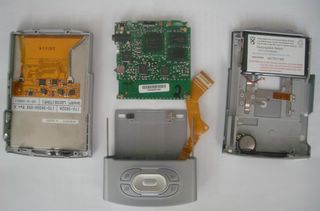
I then left it alone hoping the battery would drain after a couple of days then re-charged it overnight but nothing happened. I even disassembled it - as you can see from the post-mortem picture above. Not a clue as to the cause of death. Should I call in CSI?

Luckily I purchased a T5 last month and at the moment I am using it. I am not entirely happy with the T5 as I do miss the voice recorder function and I think the new file system is a bit buggy, and palmOne is slow in coming out with a patch.
So this "Palm Jedi" is now thinking the unthinkable. Should I go to the "Dark side" and get a PeePeeSee?

The Dell Axim X50v is something I am considering given the hardware specs (VGA screen, dual wireless, replaceable batteries) which look superior to the T5's. The thought of switching software platforms is rather daunting though but others have done it. Docsboard has a couple of threads on this:
Dell Axim X30 (the 624 MHz version) or Palm Tungsten T3?
Windows Mobile (PocketPC) 2003 Dell Axim X50v
The crucial bit is to see how Contact management will be on the PPC platform - this will pit Pocket Informant against Agendus Pro.
As for medical programs, I think there playing field is almost equal nowadays as there are versions for the PPC as there are for Palm e.g. ePocrates.
Of course it means work for me to as I would then definitely have to port Haemoncrules over to the PPC platform :P

I think what I'll do is get the Axim X50V when Dell has a discount sale like they did recently over here. I'll slowly set it up to see if the switch is feasible.
In the meantime I have fired off an email to palmOne support detailing my gripe with them. A $300+ investment which lasted a little over a year is pretty pathetic. palmOne's PDAs have been suffering a decline in build quality and reliability over the years. Unless something is done to stop the rot, 2005 will be the year Palm died.

Friday, February 18, 2005

Stellar use of technology

MobileHealthData reports:

Durham, N.C.-based bioMerieux Inc. has released a Web-based system that integrates and analyzes patient microbiology information to offer physicians decision support. The STELLARA clinical intervention and patient monitoring software integrates with the vendor's antibiotic resistance results application as well as a hospital's lab and pharmacy systems. It also offers therapeutic recommendations for such results suggested by various medical best practices.
The system, which can be used on PDAs running the Palm OS operating system, is available in four levels. The first level offers real-time connectivity to back-end data systems. The second level can feed the aggregated data to pharmacists and clinicians. The third and fourth levels offer alerting capabilities.
The system, which will be live in 12 hospitals by June, can increase patient safety by giving clinicians access to the most up-to-date information at the point of care, vendor executives say.


You can download a demo from bioMerieux's website. For physicians who deal with infections and need quick and accurate advice on choice of antibiotics, this looks interesting.

As an aside, the bioMerieux page has pictures of Tungsten|C's - currently palmOne's ONLY PDA with built-in Wifi and this is getting very long in the tooth and an update long overdue - is it ever coming?
My T3 died lately and I have my T5 as my only PDA. I always feel more comfortable with a backup at hand but looking at palmOne's line-up, it's quite pathetic. I don't want a smarthpone with crippled Ram capacity and no Wifi. I want a dual-wireless PDA with both Bluetooth and built-in Wifi. Sadly, for the first time in years, I have to look at the Pocket PC camp and the Dell Axim X50V is looking more attractive each day!

Wednesday, February 16, 2005

C-Tools overview

C-Tools 2.0 has been released and is an excellent free Personal Digital Assistant (PDA) software package that helps doctors and their staff prevent, diagnose and treat cancer.
New Media Medicine has a good overview here
I hope to be able to review it in good time.

Tuesday, February 15, 2005

ePocrates at heart

A message from the ePocrates team:

February 14th is not just Valentine's Day; it's also Congenital Heart Defect Awareness Day, and National Donor Day. This month we also recognize American Heart Month, National Wear Red Day on 2/4 (for women's heart disease awareness), Cardiovascular Rehabilitation Week 2/13-19, National Women's Heart Day on 2/18 and Heart Failure Awareness Week 2/13-19.


Epocrates offers many features that will help you care for your patients' heart health, including:

* The latest information on cardiac drugs and drug interactions
* Free StatCholesterol tool (includes ATPIII cholesterol guidelines and coronary heart disease risk calculator)
* Free HTN QuickRef™ tool (includes JNC7 guidelines and Framingham Risk Calculator)
* Insurance coverage information and pricing to help you save patients money
* Patient medication instructions in English and Spanish
* Diagnosis and treatment of cardiovascular diseases and conditions
* Treatment recommendations for infections e.g. endocarditis, pericarditis
* Cardiology calculators, clinical criteria and decision trees
* Differential diagnosis and follow-up for AHA-recommended C-Reactive Protein Test
* Preventative measures for Endocarditis Prophylaxis and hypertension
* ICD-9 codes to help you get reimbursed

To learn more about all of these valuable features, visit our Heart Health Web Page.

Warm Wishes,

The Epocrates Team


Goodness, I didn't realise there were so many "heart related" awareness days/weeks/months.
Here's wishing you all a Happy Valentine's Day ;)

User experience: Darlene

Darlene writes:

I have a treo 600 packed with medical information. I work with cancer patients as a patient advocate and cancer guide. I have both allopathic programs and CAM programs. The herbal programs allow me to check for herbs that may interfere with pharmaceuticals. I use the chemotherapy programs and staging programs for oncology. I could not work without my Treo. I also can get updates and cancer alerts from the various webs to which I subscribe.
Darlene


Looking up drug information is probably the most frequent medical app usage I think. Well, it is for me (right up there next to Medcalc) and yes it is handy to look up regular drug info as well as herbal drug info.
There is still a "wow" factor and patients are often impressed e.g. when you convince them that they should not be taking Ginseng with their Warfarin by showing them the info from your herbal formulary on the Palm.
For physicians, it's far less embarassing looking up info on the Palm than a book!

A free Gmail invitation has gone out to Darlene and I still have plenty left. Please write in for one!

Monday, February 14, 2005

User experience: elmo

Well, not Sesame Street's Elmo, but elmo of KVPUG wrote:

I am a house pharmacist and this is an example how i use my Zire 72 when Dr. ask me questions about drug dosing.

1. 5MCC (to get a brief info about the disease)
2. Oxford Medical Dict (much easy to understand compare to stedmans)
3. MedCalc (to calculate CrCl - lazy to use calculator)
4. Lexi Drug (to get the dosing of a drug for eg renal impairment)
5. Johns Hopkins Antibiotic (if the drug is Ab)
6. Micromedex (sometimes to double check the doses, just in case)

Then only i tell the Dr.

7. PIER (for extra reading at home)

i also use InfoRetriever for clinical practice guidelines and drug trials (even though PIER is more than sufficient) as reference, IdentADrug in drug identification, Epocrates to keep me updated about current trend in medicine, kdic (introduced by palmdoc) to refer to chinese words so i can label the medicine for the patients in chinese. For drug interactions, i use micromedex.
ABCLabData for lab related enquiry.

Future...mmm...i think everyone in medical field will use palm as their main reference in their practice. As a pharmacist it is better for us to start off now, hoping in future not getting replaced by palm. Else we will need to find another job.


Thanks for writing in elmo! A free Gmail invite goes out to you (you may need to check your Bulk email folder as sometimes it goes there).
No, I don't think pharmacists will ever be replaced by PDAs ;) Technology may threaten certain jobs though e.g. with telemedicine, non-interventional radiologists may find themselves out of a job, replaced by remote reporting.

OK folks, I got plenty more GMail invitations so please write in!

Mobile medical imaging

There's a discussion going on in KVPUG about mobile imaging tools for Radiologists as reported in News.com
This is a report on an Opensource application which uses Apple iPods to store and view radiology images. Quite clever.
But then someone in KVPUG also posted:

All this is known tech.. I have referred cases of trauma victims just by sending a MMS from my HP to my colleagues and you can see them running to the operating theatre.. no need Ipod... why not just view on the bigscreen of t3/t5? even better WHEN palm does a 640x480...
In GHKL (I was doing ortho) during my calls I carry my digicam, see cases, take photos, show my consultant and make decision when viewing on my t3..some decisions to amputate were made from a t3 screen..


Interesting application of a T3. So do you use your PDA for mobile medical imaging?
I can imagine the PDAs with built in cams like the Zire72 and the Treos may actually come in quite handy.

Clinical Nephrology 2006

Pacific Primary Care have updated Clinical Nephrology 2006 in Palmgear. Kudos to them for updating their excellent text references but to nit-pick a little, must they always name their editions 1 year in advance? :P
Topics include: acute & chronic renal failure, edema, hypertension, acid-base physiology, hematuria, proteinuria, rhabdomyolysis, electrolytes, urinalysis, cystic diseases, cancer, RTA, drug dosing in renal failure, cystic casease, renal drug toxicity, electrolytes, labs, kidney transplant and more much, much more...

Saturday, February 12, 2005

Gmail reminder

Google's getting very generous and I still have 50 free Gmail invitations to give out. So if you care to end me an email about your Palm Medical coomputing thoughts and experiences (which I'll post here) I'll send you the invite.
Gmail's great - 1 Gb of storage, 10MB attachments, fast and easy to use.

Harrison's in Palmgear!

Has someone made a mistake here? Harrisons Principles of Internal Medicine "stripped and converted to iSilo format" available as freeware in Palmgear? Goodness. I wonder how long this will last there before it's withdrawn? 8-0

Henry Ford and Rcopia

New Media Medicine reports that Henry Ford Health System has chosen Rcopia ePrescribing to improve patient safety and reduce prescription-related costs.
Physicians can use DrFirst Rcopia via the web on desktop, laptop and tablet PCs. Mobile implementation is powered by DrFirst Rcopia for Palm OS(R), which integrates seamlessly with the web-based system to ensure full on-line and off-line functionality.

Friday, February 11, 2005

Palm tutorials

Spotted in PalmAddicts:

I run a website for doctors called New Media Medicine – www.newmediamedicine.com. The site has information on electronic medical records systems which includes the use of PDAs. We’ve recently added a couple of flash tutorials on how to use Date Book and Address Book in clinical settings. It would be great if you could mention this on your website and include us in your list of links.
- Chris Paton


I find that at least 2/3 of the time on the PDA is spent on the builtin "PIM" apps - datebook, contacts, tasks and memos. I notice that many doctor colleagues and indeed PDA users in general aren't maximising the functions available to them in this area. For instance, they will just lump all their contacts into "Unfiled" and don't bother to categorise them or don't organise their phone numbers properly into Work, Mobile etc.
If you fall into this category, do take the trouble to run through the Flash tutorials in the New Media Medicine site.
Datebook Tutorial
Address Book - Part 1
Address Book - Part 2
Address Book - Part 3
Address Book - Part 4

While you're there, New Media Medicine looks like a great link for EMR. There's also notice of a Royal Society of Medicine Handheld Computers Workshop which will be held on April 7, 2005 in London.

Thursday, February 10, 2005

ScolioMeter 1.1

ScolioMeter has been updated to support OS 5 machines. Grab this freeware idiopathic adolescent scoliosis guide from Palmgear.

Description:
ScolioMeter is handy guide to help primary care physicians decide when to refer, how to treat, and what to look for in idiopathic adolescent scoliosis. Both "thin" (requires NSBRuntime) and "fat" (no runtime required) versions of the app are included for your convenience.

PDAs find happiness

Newswise reports that a new study employing PDAs has found that patients with severe illnesses and disabilities don’t wallow in misery and self-pity all the time, and in fact may be just as happy as those without major medical conditions.
I thought it was a novel way to study mood, especially using PDAs to beep and prompt the patient to assess their mood.

The researchers made their surprising finding by having 49 pairs of dialysis patients and healthy people report their mood every few hours for a week, using a handheld personal digital assistant (PDA) such as a Palm. The patients had all been in dialysis for at least three months, visiting a hemodialysis center three or more times a week for hours at a time to have their blood cleaned because their kidneys had failed.
Lead author Jason Riis, a former U-M graduate student now at Princeton University, programmed the PDAs to beep randomly during each two-hour period of an entire week, and prompt participants to report their mood at those random moments by completing a quick series of ratings.
“The big advantage of using PDAs is that you can get representative snapshots of a person’s experience, rather than just relying on their overall impressions of their lives,” says Riis, adding that several studies have shown such overall impressions to be biased in a variety of ways. “Our snapshots revealed that the patients were in good moods the vast majority of the time, and that their moods were not substantially worse than those of the healthy people.”

Wednesday, February 09, 2005

Eponyms

Medical Eponyms, freeware for PalmOS by Andrew Yee has been updated to version 1.83 with 1550 eponyms. There is also a PPC version plus it is also available in multiple database formats - Jfile, Handbase, MobileDB, iSilo, Doc and Tomeraider - if you prefer.
Great job, Andrew!

Tuesday, February 08, 2005

Feedback: Rich Chen

Rich Chen writes:

Hi !
My name is Rich Chen, and I am an internal medicine physician
practicing in the suburbs of Washington, DC, USA.

I'm on my second Palm Vx, having dropped the first one in a toilet a
couple of years back. I carry it around at work all the time, and feel
almost naked without it. Its 8Mb RAM is fully packed with usually
<100K to spare. Stuff on my Palm:
- Epocrates Rx Pro
- MedCalc
- Shots 2005
- MDRD GRF calculator
- dTree (mini-mental status calculator)
- hospital telephone directories
- a whole bunch (2,500+) of ICD-9 diagnosis codes, as our practice has
found that the best way to code accurately is for doctors to do it
ourselves.

I'll upgrade when this machine fails. The digitizer of this
refurbished unit has never been as good as the original and now
requires recalibration every couple of days. I'm not sure to stick
with Palm or to go with PocketPC, given that Palm hardware seems to be
a product cycle or so behind PocketPC these days with features and
processor speed. Our hospitals are now supporting wireless (IR)
transmission of patient data and I'm looking forwards to eventually
using a PDA capable of this, along with WiFi/BT, and a VGA screen.
Hopefully Palm will develop a machine to keep my business.

I just got my wife, also an internist, a Zire 72 last month, at 60% off
retail. She really enjoys playing games on it but hasn't used the
medical applications at all. Thank you!


Thanks for writing in Rich. A Gmail invite has gone out to you!
Hmmm, I really think the Vx is due for an upgrade. I agree with you that its a dilemma nowadays to decide between Palm and PPC. The PIM handling on Palm is still superior but that is only one of the few advantages left. PPC hardware is beter value for money and if built-in Wifi is important than I think PPCs like the Dell AXim X50v are excellent value and make better choices given that palmOne has not upgraded their "Wifi builtin" Tungsten T|C model (c'mon palmOne, buck up - where IS that dual wireless PDA we're all waiting for!!!). Most Palm medical apps nowadays have PPC equivalents so its not a big problem. My current PDA is a Tungsten T5 and I have Wifi access with palmOne's SD Wifi card. I'm pretty happy with it overall - you don't lose data if you forget to charge and I like Drive mode/File transfer.
The advantage of upgrading from the Vx is that you get a PDA with external storage capability - something the Vx does not have and vital given the large databases found in medical apps today.
Let us know what you decided on eventually!

Medcalc updated

Medcalc, the great free medical calculator with tons of formulae, has been updated once again and in version 5.2, the changes are:
- Adds 3 formulas (cardiac output [echo], opiate equivalence, O2 tank remaining time)
- The usual bug fixes

I was thinking of adding an Opiate equivalence module to Haemoncrules but this guy has beaten me to it :P

Sunday, February 06, 2005

More free Gmail invites

I've got even more free Gmail invites to give out! All you gotta do is to write to me and share your Palm Medical computing experience - what you use, your favorite apps, your thoughts on Palm's future etc.

Friday, February 04, 2005

ProfileMD Classic

ProfileMD has been updated and is a useful freeware app for storing your personal heath record.

Description:
ProfileMD Classic is a personal health record for PalmOS handhelds.
ProfileMD Classic allows you to track allergies, medications, surgeries, and illnesses.
Update Description:
v1.02:
- Support for landscape screens.
- Added sections for blood pressure, blood sugar, weight, peak flow, symptom log and more!

Skyscape in Sierra Leone

If you are thinking of joining Doctors without Borders or something similar, then don't forget to pack your PDA and your Skyscape or other references with you. Skyscape has this story on how Physicians Helping Children in Africa have found Skyscape references like 5MCC so useful.

Thursday, February 03, 2005

Taber's Unbound

Unbound Medicine has updated the popular Taber's Cyclopedic Medical Dictionary and the 20th edition is now available.
Taber's Cyclopedic Medical Dictionary, published by F.A. Davis, defines more terms than any other health science dictionary. With approximately 56,000 terms in all — including 8,400 new and revised terms — Taber's 20th is the most comprehensive health science dictionary available today.

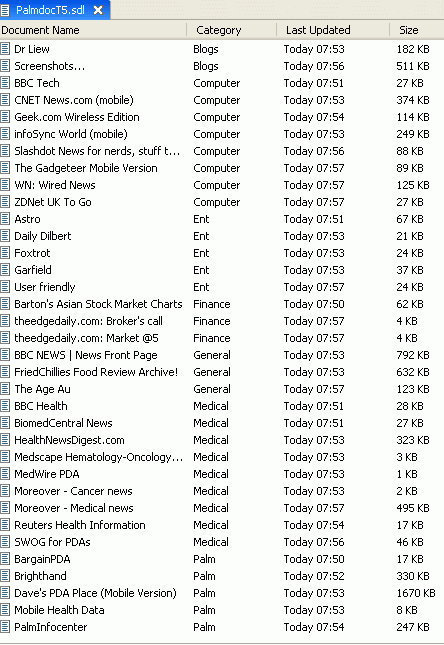
I think a dictionary in your Palm PDA is very handy. Now and then you may have the need to look up the definition of something obscure like "pampiniform".
It's hard to choose between Taber's and Stedman's medical dictionary. I think both are very good.

Size matters

J Faughnan bemoans the fact that "no company will again make devices to fit into the front pockets of americans".
I guess he is referring to the current batch of bulky PDAs, particularly the less slim PPCs (e.g. the iPaq 47xx). Thankfully my T5 is still slim enough to put in my front-shirt pocket.
I think size is important. If you don't carry your PDA with you, you aren't going to use it often. The front pocket is a handy location and an important consideration for me since I don't wear a lab coat anymore nowadays. I have a surgeon colleague who worked thru several PDas because of his habit of leaving them in his back pocket.

Palmdoc says, "if it can't fit in the front pocket, it ain't a PDA"

Tuesday, February 01, 2005

Blackberry health warning

Well, the BBC now reports that using Blackberries may be hazardous to your health - repetitive use could cause arthritis or harm tendons in the thumb.
I detest keypads. Give me minimalistic buttons and Graffiti anyday. When I look up information on a PDA (contacts, drug info or whatever) I sure hope designers do take into account single handed action simplicity. I really appreciate it when designers make use of the Dpad and rocker buttons to facilitate this one handed use. Isuppose better wear out only one thumb as opposed to two!
For writing notes and text messages, I would then switch to Graffiti. I find it faster than using a tiny keypad.

The future

Well, the data shows that PDA growth in the medical world is indeed stagnating.
Maybe palmOne has got it right when it is concentrating on Smartphones. Data from canalys.com shows that smartphones are up a phenomenal 101%.
Well, I had a first hand look at the Treo650 last weekend and I must say it does look like a nice smartphone. The screen is absolutely brilliant for its size. Ntech of KVPUG has a review here.
I would not switch yet until palmOne comes up with:
- a smartphone with much more Ram than the paltry 32MB of which only 22MB is available. The new file system hogs even more Ram per application. Already I am down to 13MB from my 55MB available in my T5 so unless a 64 MB (and preferably 128MB) is released, this is the main limitation for me. Moving applications to card just is not the same and does slow me down.
- Wifi. Preferably builtin. I would also like to see a good VOIP solution. At the moment Skype is very popular but there is still no PalmOS version unfortunately. PPC PDAs have the advantage of being able to run PocketSkype.
- a larger screen. I am spoilt by the size of the T5's screen. No, it doesn't have to be that big but it would be nice to support 320x480 resolution.
- Support for bluetooth audio profile is a must and do use BT 1.2 not the outdated 1.1, and for heaven's sake don't leave out things like a proper stereo audio jack.

I don't know if the T5 is the last PDA I'll ever use from palmOne. I sure hope they'll release that elusive "power Palm user's dream machine" with dual wireless and great battery life. If they don't do so, I suspect many will hop over to the PPC bandwagon where there seems to be better value for money in terms of hardware capability. The Dell Axim X50V for instance is great and if priced say 25% lower on discount (which Dell did recently over here) it is a great bargain.

Sunday, January 30, 2005

Asian Food Calorie Calculator


PeterSCM's freebie has been uploaded to the KVPUG Yahoo group files section
(you may have to Join the Yahoo group first - membership is free)

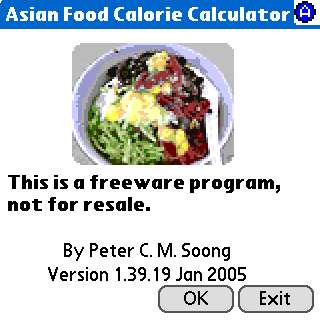
P.S. In case anyone is curious, the picture on the splash screen is that of a cold sweet asian dessert called "Ice Kachang" or sometimes "ABC" (Air Batu Campur). Yum....... :)


Saturday, January 29, 2005

Waking up

Here's a wake up call to all anesthetists who have yet to discover the world of PDAs. Waking Up Costs blogs about Palm Anesthesiology a useful resource written by Donald M. Voltz M.D. for Anesthetists who use Palm PDAs.
We need more Expert Guides in other medical disciplines..... Palmsource better wake up too...

Friday, January 28, 2005

More evidence PDAs Help Prevent Errors

MobileHealthData reports that Payer Finds PDAs Help Prevent Errors

A survey conducted by MedAmerica Mutual Risk Retention Group Inc. found that its physicians were able to avoid a range of medical errors by using PDAs. The Walnut Creek, Calif.-based liability payer surveyed 224 of its insured physicians for the study, conducted throughout 2003 and 2004.
Sixty-five percent of survey respondents said they avoided dosing errors by using PDAs. Another 58% said they avoided dosing frequency errors. Further, 25% said they avoided a drug error; 24% a therapeutic error; and 18% avoided other errors.
MedAmerica Mutual conducted the survey to assess the impact of its support of PDA use in clinical care. In 2001, the payer began offering its physicians PDAs and subsidies to purchase drug reference software from Epocrates Inc., San Mateo, Calif.


It seems that this sort of data is dependent on the respondents' feedback. A prospective study may give more reliable data but short of this, surveys do give some idea how physicians are using their PDAs and how useful they find them.
It's good to hear that Payers see the value in offering PDAs and drug reference subsidies. Now if only more of them do so (especially where I work!).

Medical Student Pocket Reference, PDA Edition

USBMIS is announcing the beta version of Bookstein’s Medical Student’s PDA Reference, for Palm and Pocket PC devices. If you would like to be part of the free beta test group for this application, you can download the beta version at BooksteinBooks.com.Beta testing will continue until Febuary 15, 2005.

More info:

Bookstein’s Medical Student’s PDA Reference is designed for all medical students, interns, and other trainees and physicians working on clinical services. It provides a streamlined well-organized source of clinically relevant medical information for your handheld device. The content includes concise discussions of 3000 diseases within all body systems. The application is a complete quick reference covering all areas of medicine, so you will never be without the answer.
The PDA edition features interlinked content, a comprehensive index, useful tables, classification systems, and databases.
Author Ken Bookstein, MD, of Portland, Oregon, has written four editions of this popular reference work. But it is now available for PDA for the first time!

Among the other features of Bookstein’s Medical Student’s PDA Reference are:
1. Consistency in organization: each disease is presented in a logical fashion, with epidemiology, diagnostic information, radiologic and pathologic information, and approaches to treatment.
2. Nonspecific clinical presentations with focus on diagnostic workup and differential diagnoses.
3. Indications, classification, adverse reactions and mechanisms for approximately 700 pharmacologic agents.
4. Information on cytokines, hormones, autocoids, neurotransmitters, toxicology, vitamins, and nutrition.
5. Outlines of vascular anatomy and muscular insertion points.

Thursday, January 27, 2005

WUCEndo

Skyscape has released WUCEndo™ (The Washington Manual® Endocrinology Subspecialty Consult)


Prepared primarily by residents, fellows, and attending physicians, this handy guide is ideal for residents called on to do an inpatient consult, for students working on an inpatient medicine service, and for specialists seeking information on endocrinology and general internal medicine management. This PDA reference covers inpatient and outpatient approaches, symptoms and diseases, and acute and chronic problems with the same front-lines practicality as the world-famous Washington Manual® of Medical Therapeutics.
Entries cover hypothalamic and pituitary disorders, thyroid disorders, adrenal disorders, gonadal disorders, disorders of bone and mineral metabolism, and disorders of fuel metabolism, including diabetes mellitus type 1 and type 2, hypoglycemia, and hyperlipidemia. Coverage of endocrine neoplasms includes MEN syndromes and carcinoid syndrome.

Wednesday, January 26, 2005

The sun rises

I last blogged about RSS feeds and Plucker back in July last year.
I still use Plucker (latest version being 1.8) as my preferred offline browser and RSS reader. Up till recently though, I have been using Jpluck to grab web pages and RSS/XML feeds and convert them into Plucker format. The author of Jpluck has stopped development and has since moved on to Sunrise. I decided to tag along and I must say Sunrise is a great improvement over Jpluck. You can schedule downloads for individual feeds and the best part is Sunrise will not convert the page if it has not changed - something Jpluck is not smart enough to do. This has encouraged me to grab even more pages and feeds:


Hmmm. Maybe I've gone a little overboard here ;)
Seriously though, this Sunrise/Plucker combo is great stuff and if you have not tried it I suggest you do. PPC users are not left out too since there is Vade Mecum which is a Plucker reader for PPC.
Doctors suffer from the N.E.T. (not enough time) syndrome and what better way to optomise your time than to take your favorite web pages and RSS feeds with you to read on your Palm while queueing up in the hospital the staff canteen.

HI-tech Pill reminders

I spotted Medgadget's SIMPill posting which is about a "pill bottle that uses cellphone technology to remind patients to take their medicines and warns them if they are about to take an extra dose by mistake. " Apparently an SMS is sent to a central server once the pill bottle is opened and if there is any delay, then the server will notify the patient or healthcare professional, aslo via SMS. Cool, but perhaps a little hi-tech you say? When it comes to important illnesses like TB where DOTS is the way to go, using technology like this would automate things.
I think there might be a market for more hi-tech pill bottles. Someone might comeup with a Bluetooth enabled pill bottle or pill dispenser - so if you open the pill bottle or container, it automatically contacts your bluetooth enabled PDA or phone and transmits a record to it that indicates the medication has been taken. That way patients or healthcare professionals can track the patient's compliance. The author of On-Time-Rx could well incorporate this Bluetooth technology to interface with the hi-tech pill bottles.

Saturday, January 22, 2005

CecilPkt22

Skyscape has released CecilPkt22™ (Pocket Companion to Cecil Textbook of Medicine)
Features Information on signs and symptoms, treatment summaries, differential diagnoses, pathophysiology and clinical manifestations.

One of the first e-medical references I purchased (for US$90+) was a pocket version of Harrison's some years ago when Ram was precious and I was using a Palm Pilot Pro with a TRG expansion card. If you think about it, that's pricey by today's standards. To be honest I didn't find it very useful in the end. Storage in handhelds is now much bigger and space is no longer that much of a constraint. I think full versions would be more useful. To my mind what is important is interface: the reference should be easily searchable and accessible otherwise it won't be used much either.
Just my 2 cents.

Friday, January 21, 2005

Screenshots: Asianfood nutrition calculator II

A fellow KVPUGer, peterscm, has completed the stand-alone conversion of the Asian Food Calorie database.
Now with a PalmOS (sorry no PPC version!) PDA, you can carry with you and calculate how much calories, cholesterol, Na+, fibre etc you've ingested after pigging out on that Asian meal. I think this is a useful resource since there are precious few databases on Asian food nutrional values.

Here are some screenshots:

The splashscreen:


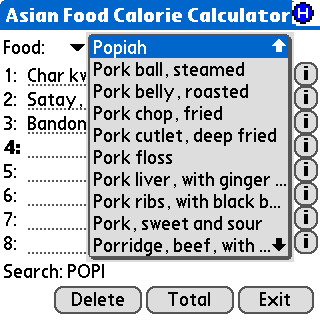
Food items are selected either from the drop down list or by keying in the name of the food at the bottom and the program will jump to the food item:


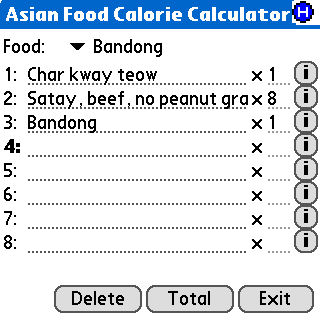
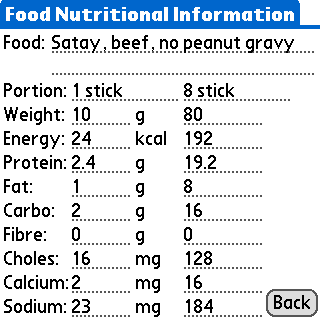
For each item, you can input several amounts of each item (translation: say you pigged out and ate 20 sticks of satay instead of 4):


You can view the damage for each item:


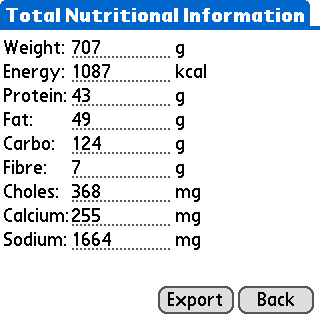
And here's the best part, peterscm has included a Total function and you can export all of these values to Palm's Memo:


Where to get this program? It's not yet released so stay tuned. If you are interested, please leave a comment here or email me.

Wednesday, January 19, 2005

ICUmath

ICUmath, freeware, has been updated

Medical calculator for adult ICU that uses 85 medical equations, including pulmonary, cardiology, BNP CHF nomogram, pharmacokinetic dosing, renal, electrolyte, chemistry, nutrition, TPN, perioperative risk, biostatistics, acls, apache II, unit conversions, rules of thumb, and an RPN calculator with TVM.
Updated Description:
Added a drug buildup program, MDRD eGFR, a/A pO2

Sunday, January 16, 2005

MosbyDrugs

MosbyDrugs (Mosby's Drug Consult & Interactions 2005) is now available from Skyscape.

This value-priced package contains two trusted clinical drug books, Mosby's Drug Consult, a highly trusted and up to date drug source to provide accurate prescribing, and Mosby's Drug Interaction Analyzer, which includes interactions highlighted along with courses of action, recommendations, and exceptional conditions.
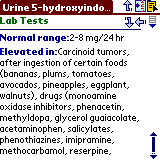
This valuable software package provides convenient, take-anywhere access to current, unbiased, accurate, and reliable drug information. It contains approximately 1,000 generic drug entries and many more prescription drug products indexed by generic name, U.S. brand name, international brand name, indication, and drug class.

Shots 2005

Shots 2005 has been updated. Grab this great immunization freebie now!
Source: Ectopic Brain - who originally developed the program but apparently the development's been taken over by professionals.

Hmmmm. Due to the increasing demands of private practice, would someone volunteer to take over the development of Haemoncrules? :)

Saturday, January 15, 2005

Lexi Auto-updates

Lexi-comp has improved on their software and has introduced a new feature which makes updates easier for users.
MobileHeathData reports:
Lexi-Connect software now enables users to click on an icon on their desktop PC that brings them to the vendor's software update Web site and searches for new data.
The new information then is automatically downloaded to the PC and to all Windows Mobile-based PDAs the PC supports. PDAs that run the Palm OS operating system must be synched to receive the data after it's downloaded to the PC.
Prior to this update enhancement, users had to manually install each of the vendor's clinical reference databases individually to ensure they had the most up-to-date information. The new update enhancement also enables users to link back to the Lexi-Comp home page to automatically renew their licenses for the vendor's reference systems.

Friday, January 14, 2005

Handheldmed Reader

Handheldmed have updated their Reader to version 6.0.1
I haven't tried this out myself but they have a ton of medical eBooks you might want to check out.

Thursday, January 13, 2005

Webinar for Healthcare Providers

pa1mOne will hold a Webinar for Healthcare Providers and Health Systems Management
(Co-sponsored by PatientKeeper and Cingular Wireless)
on Thursday, January 27, 2005,
10 AM - 11 AM PST / 1 PM - 2 PM EST

The Webinar includes TWO chances to win:
- a free Treo 650 smartphone from palmOne, OR
- a customized Needs Assessment from PatientKeeper

The blurb:
How are healthcare organizations and providers taking advantage of the latest advances in mobile technology and preparing for the future? This webinar explores extending existing IT investments, driving adoption among physicians, and avoiding future obsolescence. PatientKeeper will review key advancements and market trends. Physicians from CHRISTUS Health (Corpus Christi, TX) and MedStar Health (Baltimore, MD) will share their personal experiences with selecting and deploying mobile healthcare solutions.
You will learn how the packaged patient management solution from PatientKeeper, palmOne, and Cingular Wireless can help you access and update clinical information as you travel from your office to one or more hospitals -- across multiple hospital information systems -- on the largest digital voice and data network in America, with the power and versatility of one of today?s most popular smartphones, the new Treo 650.

Tuesday, January 11, 2005

Ferri's Clinical Advisor 2005

Skyscape has released Ferri's Clinical Advisor 2005

Ferri's Clinical Advisor 2005 provides the busy physician with a fast, efficient way to identify important clinical information about the most commonly encountered medical disorders. The PDA edition includes all diseases and disorders (615 common medical conditions), the complete differential diagnosis text (displays nearly every possible cause for 472 different signs and symptoms), a large selection of laboratory tests, Periodic Health Exam tables, and herbal product appendices—all in the palm of your hand.
C-Tools Web Site Launched

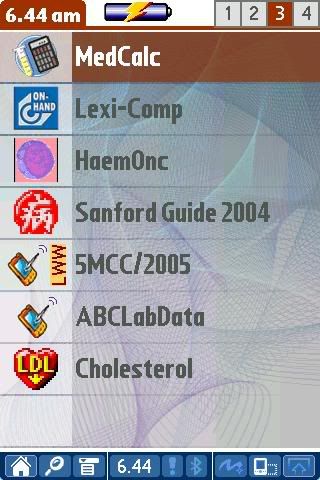
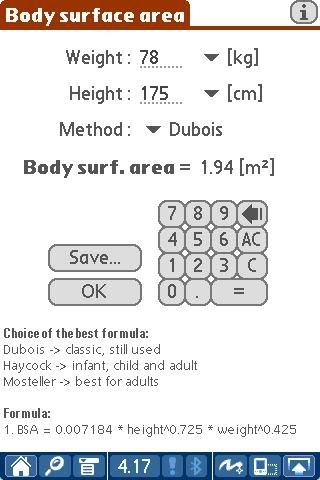
The American Cancer Society C-Tools Webpage has been revamped and they are on-target for release of the Palm and PPC versions of C-Tools by the end of the month, the beta testing phase having just been completed.

Monday, January 10, 2005

Untapped power

AMNews has an interesting article dated January 17th (wow, a sneek preview!!) on Doctors and handhelds.

When handheld devices hit the market, many experts predicted that physicians, even those who weren't early adopters of computers and health technology, would quickly find use for a device that seemed to fit right into their busy lives, their need to have access to information and their constant mobility.
And those predictions were correct. About 40% of practicing physicians owned a personal digital assistant in 2004, up from 19% in 2001 and more than four times greater than the overall percentage rate of consumer adoption, said Mark Bard, president of Manhattan Research LLC, a market research company in New York.
But the other end of those predictions hasn't held up -- that physicians would find PDAs useful as a clinical tool. Although physician adoption of PDAs in the past four years soared for various reasons, the devices have yet to come close to being used for their fullest potential in medicine.


I agree. How many colleagues do you know who are under using their PDAs or PDAphones? I know of some who use it only for the contacts and addresbook book function. I have seen plenty of empty Memos and Todos and nary a Medical application. Only yesterday I showed a diabetologist colleague who got pretty interested when I demo'd Statcoder's great freebies like Cholesterol™ (can you ™ Cholesterol btw ;) ). It's just about lack of awareness I think.
Someone in the Chatterbox just asked about a list of "must have" Medical applications for the Palm. I guess this list will vary a little from doctor to doctor so could you guys care to submit to me your favorites and I'll compile them here.

In the meantime the same article has some interesting stats:

Over the past four years, the percentage of practicing physicians who have and use personal digital assistants has grown significantly, though it appeared to have stalled in 2004.

Adoption rate
2001 19%
2002 30%
2003 40%
2004 40%

Source: Manhattan Research LLC


And suggests some areas for you to "tap" your underused PDA:

Although many doctors use a personal digital assistant, most physicians are using PDAs for personal rather than professional use. Here are some of the applications or tasks that a PDA can help you perform in the office:

* Charge capture and coding
* Clinical note-taking
* E-mail
* Electronic prescribing
* Medical calculators
* Medical reference
* Patient record access
* Patient scheduling
* Pharmaceutical reference
* Telephone numbers and addresses of patients, consultants and pharmacies
* Test ordering and lab results


Btw, if you write in with your Palm Medical experiences and favorite apps I'll send you a free Gmail invitation while I still got 'em - 4 more to go!!

Screenshots: T5

Love the new launcher. It supports shortcuts to applications, files (like MP3s), folders and even web links.
It makes navigation fast and easy.
Here's a screenshot:


The other thing I love about the T5 is the contsant 320x480 mode, and in fact I didn't realise Medcalc supported it nicely too! :)


Besides this, I do lova the much improved battery life and overall the T5 feels almost as sprightly as the T3. Downside is application and data size becomes really bloated and some functions like soft reset are MUCH slower. Overall I could live with this PDA and would recommend it to colleagues - especially forgetful ones who seem to keep losing data when they go on holidays and forget to charge their Palms!

Sunday, January 09, 2005

CME Watch v0.6

CME Watch has been updated to v0.6. Freeware.
Features:
- Keep Track of your CME Hours on your Palm
- This program automatically Adds and summarizes Total CME Hours

T5 and Medical Apps

Well am having a busy weekend so far trying to port over my T3 applications to my new T5. I am pleased to report that the key medical applications like Medcalc, Skyscape applications, Lexi-drugs work on the T5. Pity Skyscape apps still can't make us of the full 320x480 screen real estate.
I also run medical databases using HanDbase and find that Handbase 3.0k is OK but there were occasional crashes on exit if I save the databases on SD card.
Yes and Haemoncrules works fine ;)

Wednesday, January 05, 2005

The T5

Sigh. Had to "upgrade" from my T3 to the T5 as my T3 is again exhibiting digitizer madness and I cannot tap on the items on the status bar at the bottom when the T3 is in extended mode. While not critical, it is annoying.
So I decided to take the plunge and get myself a T5 after reviews do reveal that on the whole it's not that bad ;) I guess I could live without a voice recorder and vibrating alarms (don't use the latter anyway) and the trade off would be the sliderless big screen and better battery. I was also pleased that palmOne came out with the Wifi drivers for the SD card which I already own.
So now I am testing out software and seeing what I need to update or even chuck out if there is incompatibility.
Right now, I am checking out this great thread in 1src forums and this T5 compatibility list being maintained by Lance Wehrung. The software listed include medical ones so its worth checking these out.

Tuesday, January 04, 2005

User experience: Robert Kindzierski

Robert Kindzierski writes in from Canada:
I am a second year medical student from Canada. Before medical school, I graduated from pharmacy where I first was exposed to a palm IIIXE. The minute I saw epocrates and how easy it was to look up drugs, I knew I needed to get one. Since that I have had the Palm IIIXE, then a Sony PEG415 (high-res B&W), then Tungsten T (great device but all buttons froze so it was warrantied), then Tungsten T3 (amazing device) w/ 256Mb SD.
I do not use epocrates anymore. There are far better resources out there. For a drug resource, I rely almost entirely on Lexi-drugs and the other Lexi-comp programs.

I use these programs most often:
1. Isilo- great for all the texts you can find on the net; also very useful for capturing web pages with isiloX
2. Lexi-comp package- Lexi-drugs (Canadian drug names and easiest to find answer quickly), interact (best interaction program out there), 5MCC (great for med school and likely afterwards to get a quick briefing on a particular disease)
3. Stedman’s Medical dictionary- most thorough dictionary and very useful for a medical student
4. Eponyms- great for looking up all the disease’s named after egotistical doctors :) and best of all it is free
5. MedCalc- great program with great interface
6. Docs to go- great program especially when used with the Palm Ultrathin keyboard.
7. Others- many skyscape programs, Sanford guide, etc.
8. Utilities- Filez, backupman, YAUC, SC-103PU scientific calculator

I am still waiting for T3 LEAP driver for the palm wifi card so I can use it at the university.


Thanks for for feedback Robert. A Gmail invite goes out to you - there are still three left for anyone else who wishes to contribute.
I think Lexi-comp has a more comprehensive drug information database compared with ePocrates and importantly too, it supports memory card storage.
As for the Leap driver there is one for the Tungsten C so hopefully someone will come out with one for the SD Wifi card.

Sunday, January 02, 2005

User experience: from En-Zed

mingthething writes in:
My introduction to PDA’s came relatively late. My first PDA was the Palm Tungsten T2 with a 128 MB sd card which I bought in the famous Low Yatt Plaza in 2003. Trusty machine. I am now a senior house officer at a hospital in Christchurch, New Zealand. I work an equal mix of adult general medicine and adult general surgery.

Calculators: Medcalc. Journalclub(for all those statistics and terms related
to epidemiology. Extremely useful for our monthly journal club)
Organizer: Agendus Standard Edition
Drug references: Epocrates Rx ver 7, MIMS (provided free to all hospital
doctors , and by far the best for Australia/NZ specific drugs) BNF
September 2004 (Isilo--x version)
Textbooks: Harrison’s Principles of Internal Medicine
Current Medical Diagnosis and Treatment 2003
Current Surgical Diagnosis and Treatment 2003
Clinical Guides: Our health board provides its own in-house manual for
resident doctors. It is called ‘the blue book’(isilo) informally. Contains
guidelines for various emergencies, various protocols for medications and
useful contact numbers applicable to within that health department. Please
don’t ask me for a copy because its copyrighted.
There is also a ‘pink book’(in isilo) for us. It’s an antibiotic guideline
which is updated according to the sensitivity patterns of the local microbes
in Christchurch area. Tells you the most appropriate antibiotic to use for a
particular condition. Very useful when treating things like community
acquired pneumonia, immunodeficiency associated infections etc.
Notes: Hi-note. And also starring my most recent acquisition, my IR wireless
keyboard.
Fun and Games: Vexed. ( I swear, I’ve never heard of some of those Beatles
songs!!)
Other fun: Various e-books. I use isilo format mostly, with Repligo
occasionally when I get books in pdf. Repligo beats Adobe Reader, hands
down. There’s a huge selection of free books (by out of copyright authors)
from The Gutenberg Project Online. I’m reading Dostoyevsky’s Crime and
Punishment in isilo format at the moment.
Keeping up to date: I mainly read New England Journal of Medicine on my
computer at home. If there’s an article I want to read some more, I save it
as PDF and use Repligo to send it to my PDA. I use Highwire to get the BMJ
onto my pda, but I end up reading the BMJ on the PC anyway , because
Highwire doesn’t include all the interesting bits, like the funny anecdotes.
Miscallaneous: Documents to Go Premium for keeping my presentations. FileZ
for file management. Froggysoft’s Necktie for learning how to tie a necktie.
Music: None.
Video clips: None.
Bluetooth: Don’t use it much , I’m afraid. GPRS is still expensive in New
Zealand, and I don’t own a Bluetooth enabled phone ….yet. Bluechat is just
stupid, but fun. Until your battery runs out.
My hopes: Please let Palmone make a pda with wifi inbuilt! And please let
there be a hospital Wifi network with electronic prescribing, electronic
patient tracking, electronic investigation requests, and high speed internet
for all the impoverished house-officers!!


Hey there Ming! You're the first KVPUGer to share his/her Palm Medical experience. PalmOne does have a PDA with Wifi built-in and it's the Tungsten C which is getting really long in the tooth. I would have gotten the Tungsten C if not for it's lack of Bluetooth which is essential for wireless communications with my Phone. Well, I guess GPRS is not that cheap over here too but with "all-you-can-eat" Edge/GPRS internet access packages being rolled out now, it is getting to be quite interesting.
Yes, I too would find the ability to access the hospital LIS even just to look up lab results wirelessly via PDA a great boon to productivity.
A Gmail invite goes to Ming for sharing his thoughts and experiences all the way from the Antipodes. 4 Gmail invitations left folks!

Saturday, January 01, 2005

Happy New Year

Another day, another year. I wonder what 2005 has in store for us in terms of PDAs and Medicine? I look forward to the survival of palmOne and Palmsource and hope that a new Palm PDA model (the elusive dual wireless one) emerges sometime this Spring.
Wishing all of you a Happy and Blessed 2005!

Friday, December 31, 2004

User experience: Yousuf Gaffar

Yousuf Gaffar writes ine:

Hi,
Thanks for the wonderful blog. I'm a senior Hematology-Oncology Fellow from Tampa, FL. I have been using PDAs since I graduated Med School in 1998. Palm III, then Visor Deluxe, then Treo 90, now Tungsten T3.

In terms of programs:
Calculators: Haemonc Rules (Best By Far, most useful); MedRules, Medmath (with Epocrates); Adjuvant! PDA program (adjuvantonline.com)
Drug Guides: Epocrates (like updates and pricing of meds that are included); Lexi-Drugs (more info)
Chemo Guides: OncoMD 04 (Comprehensive); Adverse event program from Amgen (received at Asco 2004); Chemo RX Plus (but no updates recently)
Staging: AJC TNM
Other: Documents to Go (ok for schedules, etc); Bonsai (for notes); Repligo (to read PDF Files, including NCCN guidelines).
For Fun: Audible (great service); Pocket Tunes (best player).
Anyway, I've managed to convert most of the fellows to using their device more often. I hope more MD's use their PDA to maximize their patient care, not just keeping phone numbers and datebook.


Nice to hear from you Yousuf. Have sent you a Gmail invite. 5 more Gmail invites left folks!
Btw, glad to hear you like Haemoncrules. Just to let you know version 1.8 is ready but have been on vacation so will put it up for download when I get back home.

Thursday, December 30, 2004

PA ToolBox 5.0

Medical Wizards have released PA Toolbox 5.0 which is a suite of 15 modules for the PA
working in the critical care, emergency or primary care environment.

PA ToolBox provides the most valuable modules from ERSuite for the PA working in the critical care, emergency or primary care environment. This product also provides substantial textbook type content in the areas of ENT and Infectious Disease, covering all common complaints. 15 task specific sections (modules) are now included, with rapid access to content via our easy to use search tool

For the vets too

Skyscape is not forgetting the animal doctors with these two new releases:

ParasitesDC™ (Parasitology: Diagnosis And Treatment Of Common Parasitisms In Dogs And Cats)
The PDA reference is can be used by both the technician and the practitioner in the clinic as a concise, easy to use and accurate means of diagnosing commonly seen parasites of dogs and cats, and to decide on an appropriate treatment protocol. The parasites selected will be those normally occurring in fecal or blood specimens found in North America. Identification will be made on the basis of shape, size and color. As the user moves through the diagnostic, key options will appear which suggest how to proceed toward a diagnosis. When a final diagnosis is made there will be a brief description of clinical signs, infectious stages, organisms with similar characteristics, zoonoses, suggested treatment options, drugs and drug dosages. The program is indexed by organism and by drugs.


VetDrugs™ (Handbook of Veterinary Drugs, 3rd Ed.)
The newly updated Third Edition of the popular Handbook of Veterinary Drugs is now available for PDAs, providing instant access to information on drug therapies for dogs, cats, horses, ruminant species, pigs, birds, rodents, rabbits, ferrets, and reptiles. Entries on over 1,000 drugs include indications, formulations, interactions, common side effects, and adverse effects. Dosages for each species are included.

PDAs in disaster relief

It is now 4 days after the disastrous earthquake north of Sumatra which resulted in devastation across coastal Asia due to tidal waves and tsunamis.

Orenjus of KVPUG (the Klang Valley Palm User Group) is one of the young Malaysian doctors who have volunteered to assist via Mercy Malaysia's efforts. At first he was supposed to go to Acheh but latest from this thread is that he'll be going to Sri Lanka.
I did tell him to go armed with his PDA ;) but Orenjus is worried about bringing along elecronic equipment. I think with a protective casing like the Aquapac, you can keep the Palm (as well as your other electronic equipment like your cellphone) safe and dry. You will need a constant source of power so if one has a Solar powered battery charger, that would be handy too!
I seriously think the Palm PDA would be a useful source of medical reference in disaster relief areas. You can't carry all that info in your head!

All the best Orenjus!

User experience: Richard Wahl

Richard Wahl from Tucson writes;

Hi.
Perspectives from a pediatrician -- here are the Palm applications I
use most often:
General medical: Clinical Medicine Consult (with iSilo), Pepid, Merck
(with free journal access).
Drug databases: Pepid, Harriet Lane, Prescriber's Letter PDA version
(and about to delete the "free, gift subscirption" to ePocrates Pro
which arrived anonymously -- just don't trust its feedback to ePocrates
central, and I still don't know who paid for it to track my look-up
activities. Also extreme RAM hog).
Pediatric specific: Kidometer (Riley Children's Hospital), Harriet
Lane, AAP Red Book (with free Highwire journal access).
Freeware: Growth-BP (formerly stat-Growth), Shots 2004, CDC 2002 STD
Guidelines (iSilo), PregWheel, Stat-Hypertension JNC-7, CDC TB
Guidelines
Misc: Natural Database (CAM modalities), Mobipocket Medical Spanish
Plus, Pocket OBG.
PDA: Tungsten-C with 512MB SD card. And love it's Wi-Fi ability to surf
and check e-mail in my local cafe.


Thanks for the contribution Richard. I agree the Tungsten C is a great Wifi capable PDA. Now with the Wifi SD Card I appreciate the ability to surf and check email too but I do find it a tad bit inconvenient to swop SD cards. I need Bluetooth however as I rely on it to communicate with my phone (an SE t610) for SMS and GPRS internet access where there is no Wifi. So please, please palmOne, do release a dual wireless PDA!!
A free Gmail invitation goes out to Richard for writing in. I have 6 Gmail invitations left, so if you want to grab these, just write in and share your Palm medical experiences!

User experience: Luiz Eduardo

Luiz Eduardo from São Paulo, Brazil writes:

I follow Medical Palm software since the days of my Palm Vx 5 years ago. When I started my internship in Ophthalmology 3 years ago I was the only one with a Palm device (a m505), out of 19 residents; now there are 10 residents with Palm devices. We all use Skyscape Will´s Eye Manual, IOL calculation software and Epocrates Dx. And all of these devices were configured by myself, most of them T3 and TE. Keep up the great blog.


Thanks for writing in Luiz. A Gmail invitation has been sent out to you. 7 Gmail invites left folks....

Tuesday, December 28, 2004

WeightWatchers for Palm

I was a little amused to read that WeightWatchers have recently released a program for PDAs that work hand-in-hand with the company's online services. The Weight Watchers on-the-Go mobile program will eliminate the need to carry around a log-book and is ahandy way to carry the 25,000 item food database.
I am amused because some time back, someone offered a simlar program for free to WW - called WWCalc, but it became The App That Weight Watchers Tried To Kill

Sunday, December 26, 2004

User experience: Bill Whitty

Bill writes:


Well First of all I use to have epocrates but since I bought my Treo 650 I have switched to davis drugs for nurses till epocrates comes out with SD transfer. Also I use tabes from Skyscape and Medcalc. Use to use infusical but also doesn't work on Treo's. Lastly I use Isilo with Clinical Medicine Consultant. Hope that is of some help. Bill


Thanks for your feedback Bill. Interesting that you had to stop using ePocrates with your Treo650. The amount of memory in the Treo smartphones does not appeal to me as a 64MB T3 user - I could never switch simply because of this. There are alot of applications which nowadays need regular Ram and the likes of ePocrates still don't support SD cards!!!
A free Gmail invite goes out to you Bill. I have 8 GMail invitations left so if anyone wants one, all you have to do is write to me and relate your Palm Medical experience and share with us what you consider your favorite Palm medical software.

Merry Christmas!

Thursday, December 23, 2004

Medical Imaging Consultant

Orrison Books and the USBMIS have released Medical Imaging Consultant, the PDA version.
This is available for both the Palm and Pocket PC platforms.
"With all the same great diagnosing information that can be found in the Print Edition, the Medical Imaging Consultant, PDA Edition allows physicians to order The One Best Test in diagnostic imaging in an intuitive, electronic format."

Reminder: Free Gmail Invitations!

I have 9 Gmail invitations left. If you would like one, all you have to do is to email me your Medical Palm PDA experience with regard to how it is useful in your daily work and your favorite applications. A free Gmail invitation goes out to every email published.
Gmail now supports free forwarding of email and also Pop access - you can configure your Versamail or Snappermail to check Gmail on the go. There is no official mobile-friendly Gmail web interface yet but if you have access to a PHP server, you can install Gmail-lite

Tuesday, December 21, 2004

RxCalc 4.1

RxCalc 4.1 has been updated

RxCalc (formerly known as Dosecalc) is an essential tool for Pediatricians.
With this you can:
- Easily calculate medication doses
- Obtain extensive information available of each of the medications:
- Work out Oral & Single-Dose Bolus Medications
The new version of RxCalc is now fully compatible with the T5, as well as the Treo 600 and 650.